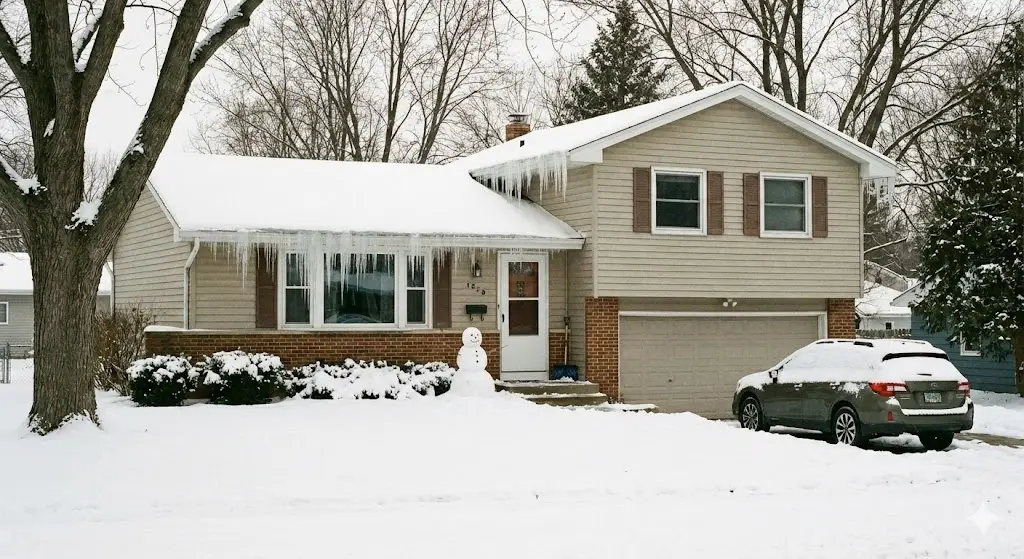
If you’ve lived in Central Indiana for long, you’ve seen ice dams: thick ridges of ice clinging to the edge of roofs, often decorated with long, sharp icicles. They might look picturesque, like a scene from a holiday card, but to a home inspector, they look like a disaster waiting to happen.
We call them ice dams, and they are one of the most destructive winter forces your home faces. As we head into the depths of an Indianapolis winter, understanding what causes them—and how to prevent them—can save you thousands of dollars in repairs.
What Exactly is an Ice Dam?
An ice dam forms when snow on the upper part of your roof melts, runs down the slope, and then refreezes at the eaves (the overhanging edge of the roof). This creates a ridge of ice that blocks melting water from draining into your gutters.
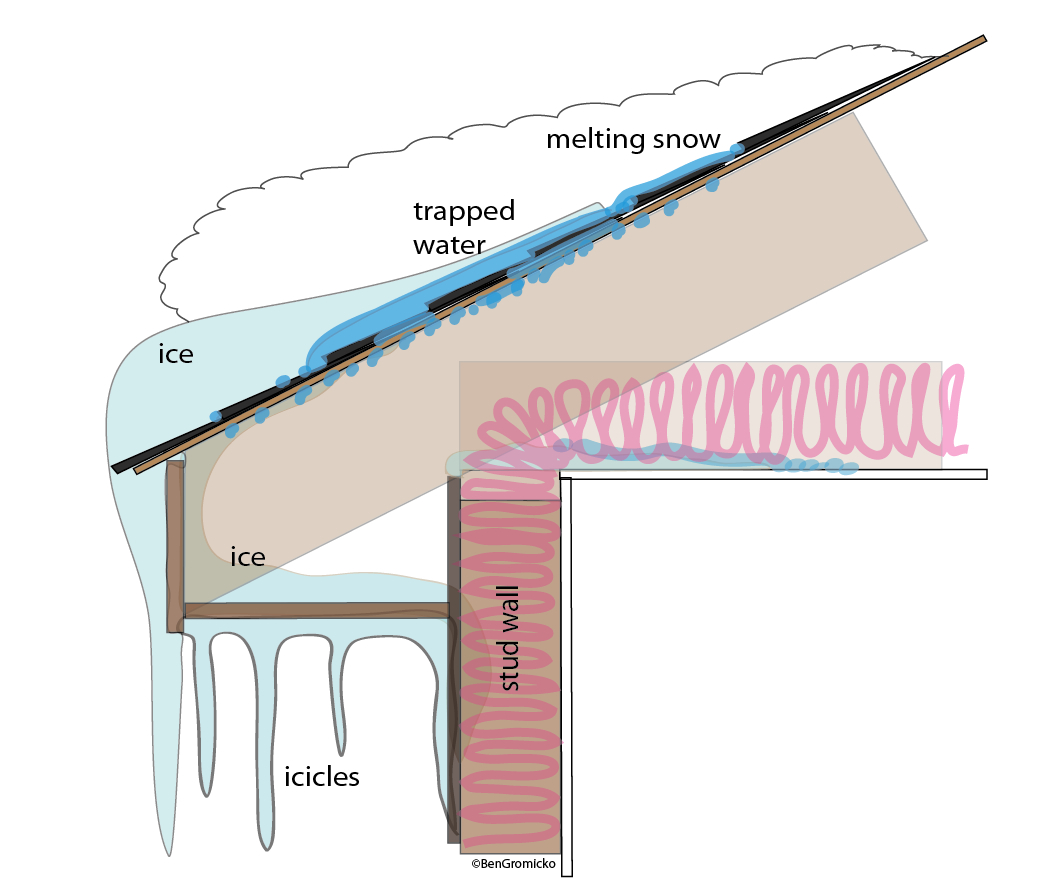
Trapped with nowhere to go, that water backs up under your shingles. Eventually, it seeps into the roof decking, through the insulation, and into your ceilings and walls. This is especially true if there is an inadequate ice and water underlayment installed. By the time you see a wet stain on your drywall, the damage is already done.
Ice Dam Root Cause: It’s Not Just the Weather
Many homeowners blame the snow, but the real culprit is usually inside your attic.
Ice dams are caused by a “hot roof.” You do not want a hot roof. You want your attic and the roof above it to be as close to the outside air temperature as possible during winter months. If your attic lacks proper insulation or ventilation, warm air from your living space escapes upwards. This warms the roof deck, melting the snow even when it’s freezing outside. When that water hits the colder eaves—which are not over heated living space—it freezes instantly.
Ice Dam Solution: Proper Insulation and Ventilation
Preventing ice dams isn’t about hacking away at the ice with a shovel (which can damage your roof!). It’s about keeping your roof cold.
Seal Air Leaks: Gaps around light fixtures, bathroom vents, chimneys, and attic hatches let warm air leak into the attic.
Upgrade Insulation: In our climate zone, you want a thick blanket of insulation to keep heat in your living rooms, not your attic.
Ensure Proper Ventilation: Soffit vents and ridge vents allow cold outdoor air to circulate through the attic, flushing out any heat that does escape.
Getting a New Roof?
Be sure your roofer does not skimp on the Ice and Water shield at the lower edge of your roof. This water-proof barrier should cover the eaves and extend at least 24 inches past the exterior wall of your house.
Proper ice and water shield installation involves applying the self-adhered membrane over the eave drip edge, then continuing 24-36 inches inside the heated wall line, and extending it into valleys, around penetrations (vents, chimneys), and up roof-to-wall transitions. Ensure full deck coverage with courses overlapping by 3-6 inches. This is secured it with just enough fasteners (driven straight and flush) for hold-down before shingling begins.
How much attic insulation is recommended for Central Indiana?
For Indianapolis (Indiana Climate Zone 5), aim for R-49 to R-60 attic insulation for maximum efficiency, and to prevent ice dams. This translates to about 15 to 20 inches of fiberglass/cellulose. Although R-38 (12 to14 inches) meets code, this may not be enough. Besides, the price of adding proper insulation to a thermally deficient attic will often pay for itself in a year or two by lowering heating and air conditioning costs.
How an Inspection Helps
You don’t have to guess if your home is vulnerable. A professional home inspection includes a thorough evaluation of your attic’s insulation levels and ventilation systems. Using thermal imaging technology, I can often see temperature differences that indicate missing insulation or hidden air leaks that the naked eye would miss.
Don’t wait for water to start dripping on your dining room table. If you’re concerned about your roof’s performance this winter, contact Indy Home Inspection today to schedule a check-up.