
Our Blog

Keep Checking Back for Regularly Updated Content!

Top Signs of Water Intrusion at Home

A faint stain on a ceiling or a musty smell in the basement can look minor at first. In reality, those are often among the top signs of water intrusion, and the longer they sit, the more expensive and disruptive the repair usually becomes.

Water rarely announces itself with a dramatic leak. More often, it shows up slowly through subtle changes in materials, odors, or surface conditions. For buyers, sellers, and homeowners, spotting those clues early can make a major difference in repair planning, negotiation, and peace of mind.

Why water intrusion deserves quick attention

Moisture affects more than appearance. It can damage framing, insulation, drywall, trim, flooring, and even electrical components if the issue is severe enough. It can also create the conditions for microbial growth and long-term deterioration.

That said, not every stain means active leaking, and not every damp smell points to a major structural problem. A good inspection mindset is calm and methodical. The goal is to identify patterns, determine whether moisture is active or past-related, and understand what should be monitored versus what needs prompt correction.

Top signs of water intrusion inside the home

Some of the clearest warning signs appear indoors because finished surfaces react quickly to moisture. When water enters through a roof, wall, plumbing connection, window assembly, or foundation area, the materials inside the home often show the first visible clues.

Ceiling stains and wall discoloration

Brown, yellow, or copper-colored stains on ceilings and walls are classic indicators. These marks often show up below roof penetrations, around chimneys, near bathroom plumbing, under upper-floor windows, or beneath an upstairs laundry area.

The key detail is whether the stain looks active. Fresh moisture can leave darker edges, soft drywall, bubbling paint, or an area that feels cool and damp. An older stain may be dry and stable, but it still deserves attention because it points to a past moisture event that should be explained.

Peeling paint, bubbling drywall, or warped trim

Paint and drywall do not hold up well when moisture gets behind them. If you see bubbling, flaking, or swollen areas, the problem may be more than cosmetic. Trim boards, baseboards, and door casings can also expand, separate at joints, or develop a distorted shape.

This is one of the top signs of water intrusion because it often reflects repeated or ongoing exposure, not just a one-time spill. In bathrooms, kitchens, and laundry rooms, the source may be plumbing. Around exterior walls, windows and flashing details are common suspects.

Musty or damp odors

A persistent musty smell is often a moisture clue even when no stain is obvious. Basements, crawl spaces, utility rooms, and closed-up vacant homes are common places for this to show up.

Odor alone does not tell you the exact source, but it does suggest the area has been holding moisture long enough to affect materials. In Central Indiana, seasonal humidity and wet grading conditions can make lower levels especially vulnerable if drainage is poor or ventilation is limited.

Flooring changes

Buckling wood, cupped floorboards, loose vinyl, cracked tile grout, or soft spots in subflooring can all point to water exposure. Near dishwashers, refrigerators, toilets, tubs, and exterior doors, these changes are especially worth noting.

Floor damage can develop slowly, so homeowners sometimes miss it until the boards start separating or the surface feels uneven underfoot. By then, the moisture may have already affected underlayment or subfloor materials.

Exterior clues that often point to water entry

Many interior moisture issues start outside. Water intrusion is often less about one failed component and more about how roofing, siding, windows, grading, and drainage work together.

Damaged roof materials or flashing

A missing shingle is easy to notice. More often, the problem is worn flashing around roof penetrations, chimneys, skylights, or wall intersections. Water can slip into very small gaps, especially during wind-driven rain or freeze-thaw cycles.

If a home has roof stains in the attic or on upper-level ceilings, exterior roof details are one of the first areas to evaluate. Even a newer roof can leak if flashing installation was poor.

Cracked or deteriorated caulking around windows and doors

Windows and doors rely on multiple layers of protection, not just a bead of caulk. Still, failed sealant, damaged trim, and poor drainage at these openings are frequent contributors to water entry.

If you notice staining below windows, soft trim, or paint failure on nearby interior finishes, the opening itself may be allowing water to get behind the wall surface. This is especially common where maintenance has been delayed.

Gutter and downspout problems

Clogged gutters, loose sections, and downspouts that discharge too close to the foundation can send large amounts of water exactly where you do not want it. Overflowing roof runoff can affect fascia, soffits, siding, window surrounds, and foundation walls.

For many homes, exterior drainage corrections are among the most practical ways to reduce future moisture concerns. The fix may be straightforward, but the impact can be significant.

Grading that slopes toward the house

The soil around the home should direct water away from the foundation. When the grade is flat or reversed, rainwater can collect near basement or crawl space walls and increase the chance of seepage.

This does not always produce standing water indoors right away. Sometimes the first clues are efflorescence on basement walls, damp odors, or minor staining at lower wall areas.

Foundation and lower-level warning signs

Basements and crawl spaces often reveal moisture conditions that have gone unnoticed in the main living areas. These areas are less finished, so the evidence may be easier to see.

Efflorescence and damp masonry

Efflorescence is the white, chalky residue that can appear on masonry surfaces when water moves through the material and leaves mineral deposits behind. It is not mold, but it is a useful signal that moisture has been present.

Concrete and masonry can tolerate some moisture better than drywall or wood, but recurring seepage still matters. It can affect air quality, stored belongings, and adjacent building materials over time.

Wood rot or fungal growth in crawl spaces

In crawl spaces, moisture often shows up as elevated humidity, wet insulation, wood decay, or visible fungal growth on framing. Plumbing leaks, ground moisture, poor drainage, and inadequate vapor control can all contribute.

This is an area where a professional assessment is especially valuable because conditions may be hidden from daily view. A house can look fine upstairs while the crawl space tells a very different story.

When the signs are subtle, context matters

One of the biggest mistakes people make is focusing on a single symptom without looking at the full picture. A stain near a chimney means something different than bubbling paint below a second-floor bathroom. A musty basement with proper grading may suggest one set of next steps, while the same odor combined with foundation seepage suggests another.

That is why a careful, non-invasive inspection process matters. The goal is not to jump to the worst-case scenario. It is to connect visible evidence with likely causes, identify areas that need correction, and help you make decisions based on clear information.

What to do if you notice the top signs of water intrusion

Start by documenting what you see. Note the location, size, smell, and whether the issue changes after heavy rain or plumbing use. If a stain is growing, if materials feel soft, or if active dripping is present, quick action is wise.

If the source is obvious, such as an overflowing gutter or a leaking supply line, address that first. If the cause is unclear or the signs suggest hidden moisture, a professional home inspection can help narrow the problem to likely systems or building areas without adding alarm. For buyers and sellers, that kind of clarity can keep a transaction moving with fewer surprises.

In the Indianapolis area, homes deal with a mix of heavy rains, humid summers, and winter freeze-thaw conditions, which means moisture issues can come from more than one direction. A thorough inspection helps separate routine maintenance from more meaningful concerns.

Small water issues have a way of becoming larger ones when they are ignored. If something in the home looks swollen, stained, damp, or unusually musty, trust that it is worth a closer look. Clear answers early are almost always easier on your schedule, your budget, and your stress level.
Roof Inspection Warranty Coverage Explained

A roof can look fine from the driveway and still hide problems that turn expensive fast. That is why roof inspection warranty coverage gets so much attention during a home purchase. Buyers want to know whether post-inspection roof issues might be covered, sellers want fewer last-minute surprises, and homeowners want clearer expectations before the next leak tests everyone’s patience.

The tricky part is that roof-related protection is rarely as simple as people expect. Coverage depends on the inspection, the condition observed at the time, the age and type of roofing material, and the exact terms of the benefit being offered. If you understand what it is meant to do and what it is not meant to do, you can make better decisions without relying on guesswork.

What roof inspection warranty coverage usually means

When people hear this phrase, they often assume it means any future roof problem will be paid for after the inspection. That is not how these programs typically work. In most cases, the coverage is limited, conditional, and tied to specific repair scenarios that occur after an inspection has documented the roof’s visible condition.

A home inspection is non-invasive. That matters. Inspectors evaluate accessible, visible components based on recognized Standards of Practice. They are looking at roofing materials, flashing, penetrations, drainage, visible wear, and signs of active or past moisture intrusion. They are not dismantling the roof system, removing shingles, or predicting the exact remaining life of every section.

Because of that, roof inspection warranty coverage is usually best understood as added peace of mind, not a replacement for maintenance, insurance, or a roofing contractor’s installation guarantee. It can help reduce the financial sting of certain roof repairs, but it still comes with rules.

What roof inspection warranty coverage may include

The most common version is a limited roof repair benefit available after a qualifying inspection. If a covered leak or roof-related issue appears during the eligibility period, the program may reimburse some or all of the repair cost up to a stated cap.

That can be useful for buyers who are already stretching to cover down payment, closing costs, moving expenses, and immediate repairs. Even a modest repair reimbursement can change the first few months of ownership from stressful to manageable.

Some programs are tied to the inspection date and become active only if the home met certain conditions at that time. Others require timely reporting, professional repair estimates, or proof that normal maintenance was performed. This is where details matter. Two roof repair benefits can sound similar in a marketing paragraph and work very differently in practice.

For a buyer, the real value is not just the possibility of reimbursement. It is having a clearer framework for what happens if a problem shows up shortly after closing. That kind of structure helps people move forward with more confidence.

What it usually does not cover

This is the part many homeowners learn too late. Roof inspection warranty coverage usually does not apply to everything that can go wrong with a roof.

It often excludes damage caused by storms, hail, high winds, fallen limbs, or other weather events that would normally fall under a homeowners insurance claim. It may also exclude pre-existing conditions that were visible and already documented in the inspection report. If the report noted advanced shingle deterioration, active leakage, or end-of-life materials, that condition may not qualify later.

Wear and tear is another common gray area. If a roof is simply old and continues aging as expected, that is different from a newly reported covered issue. Improper installation, neglected maintenance, blocked gutters, structural movement, and problems related to skylights, chimneys, or roof-mounted equipment may also fall outside the benefit.

That is why the report matters so much. A clear modern report written to educate, not alarm, gives you the context to understand whether the roof appears serviceable, marginal, or in need of prompt specialist review.

Why the inspection itself matters more than the coverage

The protection gets attention, but the inspection is still the main event. A thorough roof inspection helps you understand current visible conditions so you can make decisions before a problem gets more expensive.

For buyers, that can mean negotiating repairs, asking for concessions, planning near-term replacement costs, or deciding the risk level is acceptable. For sellers, it can mean identifying issues early enough to address them before they disrupt a transaction. For investors, it helps with budgeting and return calculations. For homeowners, it provides a baseline for maintenance planning.

In other words, the best outcome is often not using the coverage at all. The best outcome is learning enough during the inspection to prevent surprises, budget intelligently, and act quickly where needed.

Roof inspection warranty coverage and older roofs

Older roofs deserve special attention because age changes the conversation. A roof that is near the end of its typical service life may still be performing adequately on the inspection date, but it carries a higher risk of future problems. That does not automatically mean a house is a bad purchase. It means expectations should be realistic.

This is where a calm, practical inspector adds value. Instead of using alarmist language, the report should explain the observed condition, note signs of deterioration, and recommend next steps when appropriate. Sometimes that means routine monitoring. Sometimes it means budgeting for replacement soon. Sometimes it means bringing in a roofing contractor before closing for a more specialized evaluation.

If a roof is older, roof inspection warranty coverage may be more limited or less likely to apply than a buyer assumes. That is not a flaw in the process. It is just the reality that older materials come with more uncertainty.

Questions to ask before you rely on roof inspection warranty coverage

If this benefit is part of an inspection package, ask for clarity before you need it. The right questions are simple.

Ask what events trigger coverage, what documentation is required, how long the protection lasts, and whether there is a reimbursement limit. Ask whether visible pre-existing issues are excluded and whether the roof’s age affects eligibility. Ask whether damage from storms or insurance-covered events is excluded. Also ask how a claim is started and whether repairs must be approved in advance.

These questions are not about being skeptical. They are about being informed. Good inspection companies welcome them because informed clients make steadier decisions.

How buyers in Indianapolis can use this information wisely

In the Indianapolis market, buyers often move quickly, especially when inventory is tight or a home shows well. That can create a temptation to treat roof-related protection as a safety net and move on. A better approach is to use it as one part of a broader risk picture.

Pay attention to the roof section of the report, not just the headline summary. Look at the age estimate if provided, the condition of flashing and penetrations, visible granule loss, signs of patching, sagging areas, gutter discharge patterns, and any interior signs that suggest moisture intrusion. A small ceiling stain may not mean an active leak today, but it should never be ignored.

If the report calls for further evaluation, do not read that as routine filler. It usually means the inspector saw something that deserves a closer look by a qualified roofing professional. That extra step can save you far more than any post-inspection coverage ever could.

The real benefit is confidence, not a promise of perfection

Homes are imperfect, and roofs are exposed to constant stress from weather, temperature shifts, drainage demands, and age. No inspection can guarantee a roof will never leak. No roof protection program can erase every risk. What a good inspection process can do is narrow uncertainty, document visible conditions clearly, and give you practical options.

That is what people really want during a real estate transaction. They want to know what they are looking at, what might need attention next, and where the meaningful risks are. If roof inspection warranty coverage is included, it can add useful reassurance. But its value is strongest when it sits beside a thorough inspection, responsive communication, and a report that makes the next decision easier.

Before you lean on the coverage language, lean on the inspection itself. A well-documented roof assessment gives you something better than broad promises – it gives you a clearer path forward.

How to Prioritize Inspection Repairs

The inspection report lands in your inbox, and suddenly every note feels urgent. A loose handrail, an aging water heater, a small roof concern, a GFCI issue in the kitchen – it can all blur together fast. If you are wondering how to prioritize inspection repairs, the goal is not to fix everything at once. The goal is to separate what truly affects safety, structure, and major cost from what can be planned for later.

That distinction matters whether you are buying, selling, or deciding what to tackle in a home you already own. A good inspection report is written to educate, not alarm. It gives you a clear picture of the property so you can make practical decisions with confidence.

How to prioritize inspection repairs without overreacting

The first step is to stop treating every item as equal. Inspection reports often include a mix of material defects, maintenance recommendations, safety concerns, and observations about systems nearing the end of their service life. Those categories do not carry the same weight.

A missing smoke detector is not the same as a cracked heat exchanger. A slow drain is not the same as active foundation movement. Peeling caulk around a tub matters, but not in the same way that widespread moisture intrusion in an attic matters. When people feel overwhelmed by a long report, it is usually because small maintenance items are mentally competing with big-ticket risks.

A better approach is to group findings by impact. Start with anything that could put people in danger, then move to defects that can damage the structure or major systems, then focus on repairs that affect daily function, and finally address routine maintenance and cosmetic concerns.

Start with safety hazards first

Safety issues deserve immediate attention because they can create direct risk to occupants. These are the items that should rise to the top of the list regardless of whether the home is old, new, move-in ready, or an investment property.

Examples often include electrical hazards such as exposed wiring, double-tapped breakers where improper conditions exist, missing GFCI protection in required areas, or overheated components. It can also include unsafe stairs, missing handrails, loose guardrails, gas leaks, combustion concerns, or the absence of working smoke and carbon monoxide alarms.

Not every safety item carries the same urgency, so context matters. A missing cover plate on an outlet is a simpler fix than evidence of unsafe wiring in the main panel. Both should be corrected, but one may be a same-day repair while the other may require fast evaluation by a licensed electrician.

For buyers, these are often the items worth addressing before closing or budgeting for right away after possession. For sellers, fixing straightforward safety concerns before listing can reduce buyer hesitation and keep negotiations focused.

Next, protect the house from bigger damage

After safety, focus on problems that can worsen quickly or lead to expensive secondary damage. This is where water, structure, and building envelope issues usually rise to the top.

Roof leaks, active plumbing leaks, poor drainage toward the foundation, signs of ongoing moisture intrusion, damaged flashing, and crawlspace water entry are common examples. Left alone, these issues rarely stay small. Water has a way of turning a moderate repair into drywall damage, wood rot, mold-like conditions, insulation deterioration, and framing concerns.

Structural issues also belong in this category, but this is where homeowners need some calm perspective. Not every crack means structural failure. Homes settle. Masonry cracks can be cosmetic or common for the age of the property. What matters is pattern, size, movement, and whether the defect affects function or suggests ongoing instability. An inspection can identify red flags, but the level of concern depends on what is actually observed.

If a finding points to possible structural movement or active water intrusion, that should move ahead of convenience items like a sticking interior door or a worn appliance finish. The reason is simple – larger house-level issues tend to get more expensive the longer they are ignored.

Then focus on major systems and function

Once safety and damage prevention are addressed, turn to the systems that keep the house livable. Heating and cooling, plumbing supply and drain systems, electrical distribution, and water heating all belong here.

A furnace that is not operating properly in January in Indianapolis is not just an inconvenience. It affects habitability and can create additional concerns depending on weather conditions. A failing water heater, a non-functional sump pump, or a plumbing defect that limits normal use should also rank high because these issues affect daily living and can escalate into more costly problems.

This is also the category where age and remaining service life become important. A system does not have to be broken today to deserve planning. If the air conditioner is functioning but near the end of its expected life, that may not be a repair request in a transaction, but it absolutely belongs in the budget conversation. Prioritizing does not only mean deciding what to fix now. It also means deciding what to prepare for next.

For investors, this category often gets evaluated through return and tenant impact. A cosmetic wall repair can wait. An unreliable HVAC system in a rental usually cannot.

Separate defects from maintenance and upgrades

One of the most helpful parts of learning how to prioritize inspection repairs is recognizing that some report items are ownership tasks, not urgent defects. Homes need maintenance. Caulk dries out. Filters need replacement. Grading may need improvement over time. Weatherstripping wears down. Exterior paint needs touch-up. These items matter, but they usually belong on a planned maintenance schedule rather than an emergency list.

Upgrades should be treated separately too. Older homes often have components that are functional but not modern by current standards. That does not always mean they are defective. A buyer may choose to improve insulation, replace older windows, or update fixtures for efficiency or appearance, but those are different decisions from addressing active hazards or material defects.

Keeping these categories separate helps people make better choices. It also keeps negotiations more realistic. Trying to treat every maintenance note as a major issue usually creates friction without improving the outcome.

Use cost, urgency, and consequences together

Prioritizing repairs is not just about what sounds serious. It is about weighing three practical questions. How urgent is it? What happens if it waits? How expensive does it become later?

Some low-cost repairs should happen immediately because the consequence of delay is high. A missing GFCI, a loose toilet causing leakage at the floor, or an active roof leak can fit that description. On the other hand, some expensive items can be planned if they are still functioning and not causing damage. An older but operating furnace may deserve budgeting and monitoring rather than panic.

This is where homeowners sometimes get tripped up. A small repair with high consequences can outrank a larger repair with low short-term risk. Cost alone should not decide the order.

How to prioritize inspection repairs during a real estate transaction

During a purchase, the smartest repair strategy is usually narrower than people expect. Focus first on safety concerns, material defects, active leaks or moisture intrusion, structural red flags, and major systems that are not functioning as intended. Those are the findings most likely to affect your risk after closing.

For sellers, pre-listing attention should go to the same areas. Addressing obvious hazards and functional issues ahead of time can make the report cleaner and the transaction smoother. It also signals that the home has been cared for, which builds trust.

For buyers, there is always a trade-off between asking for every repair and protecting the deal. A long request list filled with minor maintenance items can distract from the issues that really matter. A shorter, more focused request is often more effective because it centers the conversation on legitimate risk.

This is especially true in competitive markets. You still need to protect yourself, but clear priorities lead to better decisions than emotional reactions to a lengthy report.

Let the report guide you, but ask for context

A thorough inspection report gives you the findings. The next step is understanding which ones deserve immediate action, which ones need specialist review, and which ones belong in your longer-term plan. That clarity is where a calm, service-oriented inspection process adds real value.

If a report is clear and modern, you should be able to identify the serious concerns without guessing. If you are unsure, ask questions. A dependable inspector should help you understand the practical significance of a finding, not just list defects and leave you to sort it out alone.

For many clients, that conversation is what turns a stressful report into a workable plan. It is also what creates real peace of mind. You do not need to fix everything this week. You need to know what protects people, what protects the house, and what can be scheduled responsibly over time.

When you look at an inspection report through that lens, the next step becomes much clearer – handle the risks first, plan the rest thoughtfully, and make decisions from a place of confidence instead of pressure.

What Do Home Inspectors Look For?

A home can look great in listing photos and still have problems hiding in plain sight. That is why so many buyers, sellers, and homeowners ask the same question: what do home inspectors look for?

The short answer is this: inspectors evaluate the home’s major systems, visible structure, safety concerns, and overall functionality. The longer answer matters more, because a good inspection is not about hunting for cosmetic flaws. It is about identifying defects, deferred maintenance, and conditions that could lead to expensive surprises after you move in.

What do home inspectors look for during an inspection?

A home inspection is a non-invasive, visual assessment of the property at the time of the inspection. That means inspectors are not opening walls or tearing apart finishes. They are examining what is safely accessible and visible, then documenting material defects and notable concerns in a clear report written to educate, not alarm.

In practical terms, inspectors are looking for three things at once. First, they check whether key systems are functioning as intended. Second, they look for signs of wear, damage, or poor installation. Third, they identify safety issues and conditions that deserve further evaluation or timely repair.

The exact scope can vary slightly based on the property, age of the home, weather, and access. Still, most inspections focus on the same core areas.

Roof, attic, and drainage

Roof problems can be expensive, so this area gets close attention. Inspectors look at the roof covering, flashing, penetrations, gutters, and downspouts. They watch for missing or damaged shingles, exposed fasteners, sagging areas, poor drainage, and signs that water may be getting where it should not.

Inside the attic, the story often becomes clearer. Stains on sheathing, damaged rafters, inadequate ventilation, and insulation issues can all point to larger moisture or performance problems. Sometimes the roof itself is near the end of its service life. Other times the bigger concern is not the shingles but the way water is being managed around the home.

That distinction matters. A roof can look worn but still perform acceptably for a while, while a newer roof with improper flashing may already be vulnerable to leaks.

Structure and foundation

When people worry about a home having “good bones,” this is what they mean. Inspectors look for visible signs of structural movement or distress in the foundation, framing, floors, walls, and ceilings. Cracks, sloping floors, sticking doors, and uneven openings can all be clues.

Not every crack is a structural failure. Concrete commonly cracks as it cures and ages. What matters is the size, pattern, location, and whether there are related symptoms nearby. A small shrinkage crack may be routine. A wide horizontal crack with inward bowing is a very different conversation.

This is one of the areas where experience and restraint matter. A reliable inspector does not exaggerate normal settling, but also does not dismiss patterns that suggest further evaluation is wise.

Exterior surfaces and grading

The outside of the house says a lot about how well moisture is being controlled. Inspectors examine siding, trim, windows, doors, caulking, and visible exterior components for deterioration, gaps, rot, and poor sealing.

They also pay attention to grading. If the soil slopes toward the home instead of away from it, water may collect at the foundation. That can contribute to basement seepage, crawlspace moisture, and long-term structural concerns. In many homes, simple drainage corrections can prevent much larger repairs later.

Vegetation can also be part of the story. Trees, shrubs, and vines touching the house may trap moisture, damage finishes, or give pests a pathway inside.

Electrical system

Electrical defects range from minor upgrades to serious safety issues. Inspectors review the visible service equipment, panel, breakers, wiring, receptacles, and grounded components. They look for improper wiring methods, double-tapped breakers, missing knockouts, damaged conductors, reverse polarity, and lack of GFCI or AFCI protection where applicable.

The goal is not to bring an older home fully up to modern code. A home inspection is not a code compliance inspection. The goal is to identify safety concerns and notable deficiencies based on current standards of practice and visible conditions.

Older homes often show this clearly. Knob-and-tube wiring, ungrounded outlets, or outdated panels do not always mean the house is unlivable, but they do affect safety, insurance, and future upgrade costs. Buyers should know that before closing, not after.

Plumbing system

Inspectors check visible supply lines, drain and vent components, water heater operation, fixtures, and signs of active or past leaks. They are looking for corrosion, poor water pressure, slow drainage, improper materials, loose fixtures, and moisture damage around plumbing areas.

A small leak under a sink may seem minor, but repeated moisture can damage cabinets, subfloors, and adjacent finishes. Water heaters also deserve attention because age, installation quality, and safety features all matter. If a unit is old, leaking, or improperly vented, that can move quickly from maintenance issue to replacement decision.

Sewer lines are usually beyond the scope of a standard visual home inspection, which is a good example of where expectations matter. If there are warning signs such as slow drains, frequent backups, or a mature property with older piping, a separate sewer scope may be worth considering.

Heating and cooling

Few things get a buyer’s attention faster than an HVAC issue. Inspectors evaluate the heating and cooling equipment using normal operating controls when conditions permit. They look at age, visible condition, basic performance, filter condition, distribution components, and signs of deferred maintenance.

An HVAC system may still be working on inspection day and still be near the end of its service life. That does not automatically make it a defect, but it does affect budgeting. The same is true for air conditioners tested during appropriate weather and furnaces that show wear but remain operational.

This is where a practical report helps. Rather than creating panic, it should separate immediate repair concerns from expected aging so clients can make informed decisions.

Interior rooms, windows, doors, and built-in appliances

Inside the home, inspectors move through walls, ceilings, floors, windows, doors, stairs, and a representative sample of outlets, switches, and fixtures. They are not judging paint colors or decorating choices. They are looking for signs of water intrusion, unsafe stairs or railings, damaged finishes that indicate deeper issues, and components that do not operate properly.

Built-in appliances are typically tested for basic function. That can include the dishwasher, range, microwave, garbage disposal, and garage door opener if installed. The emphasis is on whether they respond and operate in a normal way, not on long-term performance guarantees.

Windows are another area where details matter. A failed seal, painted-shut sash, missing screens, or damaged trim may sound small, but those details can point to moisture exposure, energy loss, or neglected upkeep.

Basements, crawlspaces, and moisture issues

If there is one issue that connects multiple systems, it is moisture. Inspectors pay close attention to basements and crawlspaces because these areas often reveal water entry, poor drainage, wood rot, mold-like growth, pest activity, and insulation concerns.

A damp crawlspace can affect air quality, wood framing, and energy efficiency. A basement with staining may have only occasional seepage, or it may have a recurring drainage issue. The difference often comes down to visible patterns, current conditions, and how the rest of the home is managing water outside.

Moisture concerns are not always dramatic, but they are rarely something to ignore. Left alone, small water problems tend to become larger ones.

Safety items and red flags

Some inspection findings stand out because they affect immediate safety. Missing handrails, tripping hazards, loose steps, exposed wiring, improper venting, and signs of combustion concerns all deserve prompt attention.

Home inspectors also stay alert for red flags that suggest specialist follow-up may be needed. That might include evidence of structural movement, widespread moisture intrusion, pest damage, chimney defects, or environmental concerns that require testing outside a standard inspection.

That does not mean every older home is full of major issues. In fact, many inspections uncover a mix of routine maintenance items, moderate repairs, and a few bigger decisions. The value is in understanding which is which.

What home inspectors do not look for in the same way

It helps to know what a home inspection is not. Inspectors are not appraisers, contractors bidding repairs, or code officials approving every detail of construction. They are also not predicting the future.

A component can work today and fail next season. A home inspection reduces uncertainty, but it does not eliminate it. That is why the best reports focus on present condition, visible evidence, and practical next steps instead of false certainty.

Why this matters for buyers, sellers, and homeowners

For buyers, knowing what do home inspectors look for helps you read the report with the right mindset. The goal is not to find a perfect house. It is to understand the house you are buying well enough to make a confident decision.

For sellers, it helps you see your home the way a neutral professional will see it. Deferred maintenance that feels normal to you may raise fair questions from a buyer. Addressing a few visible issues early can make the inspection process smoother.

For current homeowners, an inspection can be a practical planning tool. You may not be preparing to sell at all. You may simply want a clear picture of what needs attention now, what can wait, and where your money will have the most impact.

At Indy Home Inspection, that is the standard a good inspection should meet – thorough, calm, and useful. The best reports do more than list defects. They help people move forward with peace of mind and a better understanding of the home in front of them.

If you are wondering what an inspector will notice, assume they are looking past the fresh paint and straight to the things that affect safety, function, and long-term cost. That is not bad news. It is how smart decisions get made.

Ice Dams, 3 Solutions for The Silent Roof Killer

If you’ve lived in Central Indiana for long, you’ve seen ice dams: thick ridges of ice clinging to the edge of roofs, often decorated with long, sharp icicles. They might look picturesque, like a scene from a holiday card, but to a home inspector, they look like a disaster waiting to happen.

We call them ice dams, and they are one of the most destructive winter forces your home faces. As we head into the depths of an Indianapolis winter, understanding what causes them—and how to prevent them—can save you thousands of dollars in repairs.

What Exactly is an Ice Dam? 

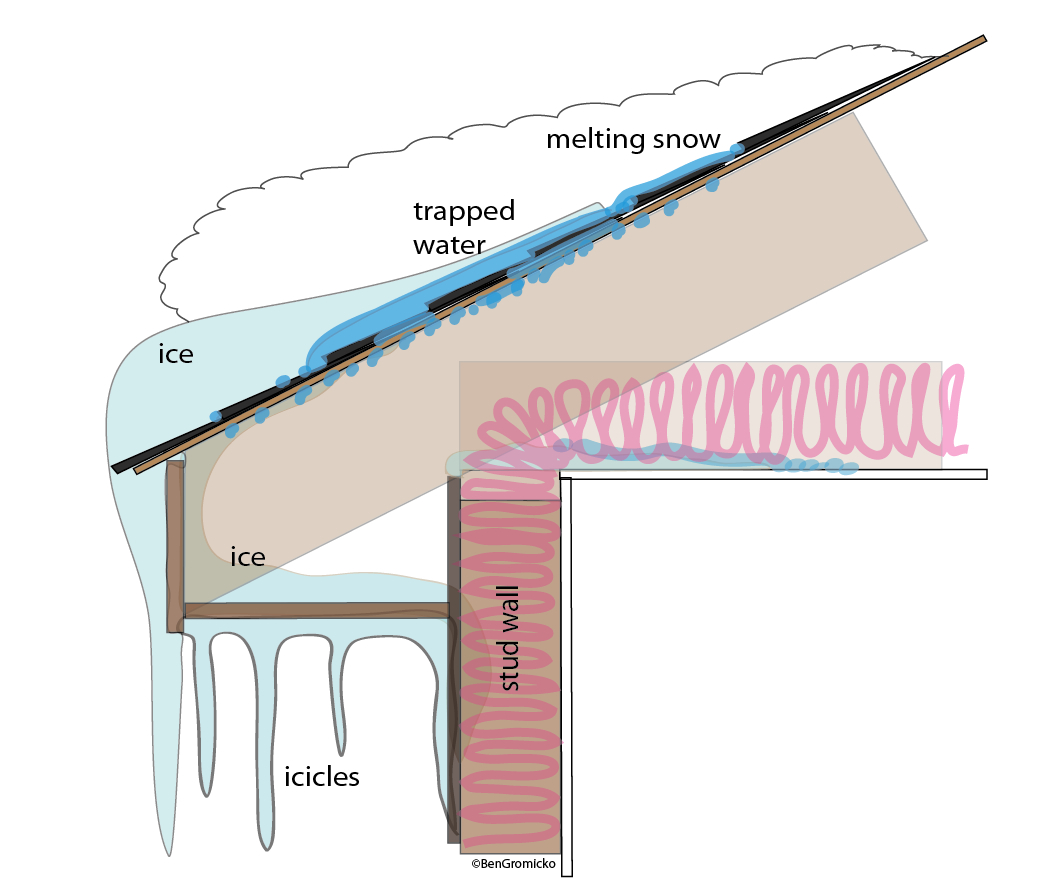
An ice dam forms when snow on the upper part of your roof melts, runs down the slope, and then refreezes at the eaves (the overhanging edge of the roof). This creates a ridge of ice that blocks melting water from draining into your gutters. 

How Ice Dams form on your roof and gutters

Trapped with nowhere to go, that water backs up under your shingles. Eventually, it seeps into the roof decking, through the insulation, and into your ceilings and walls. This is especially true if there is an inadequate ice and water underlayment installed. By the time you see a wet stain on your drywall, the damage is already done.

Ice Dam Root Cause: It’s Not Just the Weather

Many homeowners blame the snow, but the real culprit is usually inside your attic.

Ice dams are caused by a “hot roof.” You do not want a hot roof. You want your attic and the roof above it to be as close to the outside air temperature as possible during winter months. If your attic lacks proper insulation or ventilation, warm air from your living space escapes upwards. This warms the roof deck, melting the snow even when it’s freezing outside. When that water hits the colder eaves—which are not over heated living space—it freezes instantly.

Ice Dam Solution: Proper Insulation and Ventilation

Preventing ice dams isn’t about hacking away at the ice with a shovel (which can damage your roof!). It’s about keeping your roof cold.

  1. Seal Air Leaks: Gaps around light fixtures, bathroom vents, chimneys, and attic hatches let warm air leak into the attic.

  2. Upgrade Insulation: In our climate zone, you want a thick blanket of insulation to keep heat in your living rooms, not your attic.

  3. Ensure Proper Ventilation: Soffit vents and ridge vents allow cold outdoor air to circulate through the attic, flushing out any heat that does escape.

Getting a New Roof? 

Be sure your roofer does not skimp on the Ice and Water shield at the lower edge of your roof. This water-proof barrier should cover the eaves and extend at least 24 inches past the exterior wall of your house. 

Proper ice and water shield installation involves applying the self-adhered membrane over the eave drip edge, then continuing 24-36 inches inside the heated wall line, and extending it into valleys, around penetrations (vents, chimneys), and up roof-to-wall transitions. Ensure full deck coverage with courses overlapping by 3-6 inches. This is secured it with just enough fasteners (driven straight and flush) for hold-down before shingling begins.

How much attic insulation is recommended for Central Indiana?

For Indianapolis (Indiana Climate Zone 5), aim for R-49 to R-60 attic insulation for maximum efficiency, and to prevent ice dams. This translates to about 15 to 20 inches of fiberglass/cellulose. Although R-38 (12 to14 inches) meets code, this may not be enough. Besides, the price of adding proper insulation to a thermally deficient attic will often pay for itself in a year or two by lowering heating and air conditioning costs.

How an Inspection Helps

You don’t have to guess if your home is vulnerable. A professional home inspection includes a thorough evaluation of your attic’s insulation levels and ventilation systems. Using thermal imaging technology, I can often see temperature differences that indicate missing insulation or hidden air leaks that the naked eye would miss.

Don’t wait for water to start dripping on your dining room table. If you’re concerned about your roof’s performance this winter, contact Indy Home Inspection today to schedule a check-up.

Prepare Your Indy Home for Fall: A Home Inspector’s Checklist

As we enjoy the last warm (or unbearably hot) days of an Indiana summer, it’s easy to forget that autumn is just around the corner. Those beautiful changing leaves will soon bring cooler temperatures, more rainfall, and eventually, the harsh Midwestern winter. As a professional home inspector, I see firsthand how a little preventative maintenance now can save homeowners thousands of dollars and major headaches later.

Think of this as more than just a chore list; it’s a strategic plan to protect your biggest investment. Before you settle in with pumpkin spice and Colts football, take a weekend to give your home a thorough check-up. Here’s a detailed checklist of where to focus your efforts, straight from an inspector’s playbook.

1. Clean and Inspect Your Gutters & Downspouts

This is, without a doubt, the most critical task for fall prep. Your gutter system is your home’s primary defense against water damage. Once the leaves start falling, they can quickly clog the system, causing water to overflow. In an Indiana autumn, that water runs down your siding and pools around your foundation. In the winter, it creates destructive ice dams on your roof.

  • What to do: Safely get on a ladder and clear all leaves and debris from the gutters. While you’re there, check that the gutters are securely attached to the house. Run water through them with a hose to check for leaks and ensure the downspouts are clear and directing water at least 3-6 feet away from your foundation.

2. Examine the Exterior and Seal the Gaps

Water is a home’s worst enemy. Small cracks and gaps in your home’s exterior can become major entry points for moisture, drafts, and pests trying to find a warm place for the winter. A careful walk around your property is time well spent.

  • What to do: Look closely at the siding. Are there any cracked boards or gaps? Inspect the sealant around windows and doors. Is it cracked or peeling? Use a high-quality exterior caulk to seal these gaps. Check for any areas where the soil or mulch is touching your siding, as this can attract wood-destroying insects. Ensure the ground around your foundation slopes away from the house.

3. Service Your HVAC System

Your air conditioner has been working hard all summer. Before you switch it over to heating duty, it needs a little TLC. A clean and well-maintained HVAC system runs more efficiently, saves you money on energy bills, and lasts longer.

  • What to do: The easiest and most important step is to replace your furnace filter. A clogged filter restricts airflow and makes the system work harder. Next, clear any leaves, weeds, or debris from around your outdoor air conditioning unit to ensure proper airflow. Finally, consider scheduling a professional tune-up with a qualified HVAC technician. They can perform a more thorough check and cleaning before their busy season starts.

4. Give Your Roof a Quick Look

You don’t need to get on your roof to get a sense of its condition. Small roof issues can lead to big interior leaks, so a quick visual inspection now can prevent a major disaster during a fall rainstorm.

  • What to do: Using binoculars from the ground, safely scan the entire surface of your roof. Look for any shingles that are missing, cracked, or curling at the edges. Pay close attention to the flashing around the chimney, vents, and skylights. These are common failure points.

5. Test Your Home’s Safety Devices

With windows closing up for the season, it is absolutely critical to ensure your indoor safety devices are functioning correctly. These devices are your first line of defense against fire and carbon monoxide poisoning.

  • What to do: Press the “test” button on every smoke detector and carbon monoxide (CO) detector in your house. The alarm should sound immediately. If it doesn’t, replace the batteries. If it still doesn’t work, replace the entire unit. Most detectors have a lifespan of 7-10 years; check the date on the back.
  • Additionally: Press the “test” button on all your GFCI outlets (usually in kitchens, bathrooms, garages, outdoors and elsewhere). You should hear it “trip” which will stop power to it and any down-circuit outlets connected to it. Then just press the “reset” button on the same GFCI outlet to turn it back on. If nothing happens when you press “test” or if your reset button doesn’t work to restore power, you may have a faulty outlet that needs replaced by a qualified contractor. Better to know it’s unsafe than to keep using a dangerous circuit.

A little proactive effort in the late summer pays huge dividends all winter long. By taking care of these items now, you can rest easy knowing your home is safe, secure, and ready for whatever an Indiana fall and winter can throw at it.

Of course, the most comprehensive check-up for a home is a full, professional inspection. Whether you’re buying, selling, or just want a detailed assessment of your current property, contact Indy Home Inspection today. We’ll give you the complete picture and the peace of mind you deserve.